

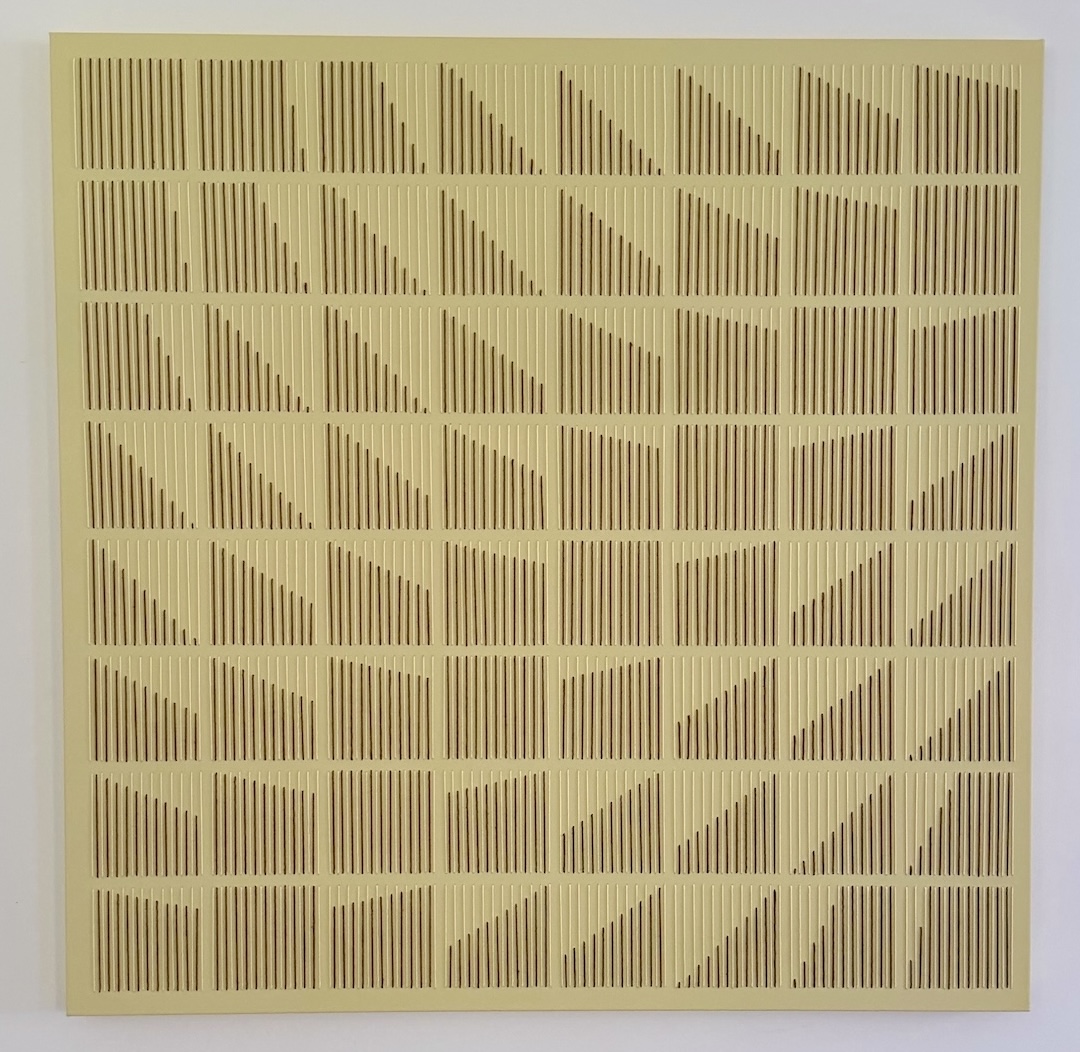
Adaptive Order 1 (2026)
100 x 100 cm
Hand-stitched cotton yarn on acrylic painted canvas
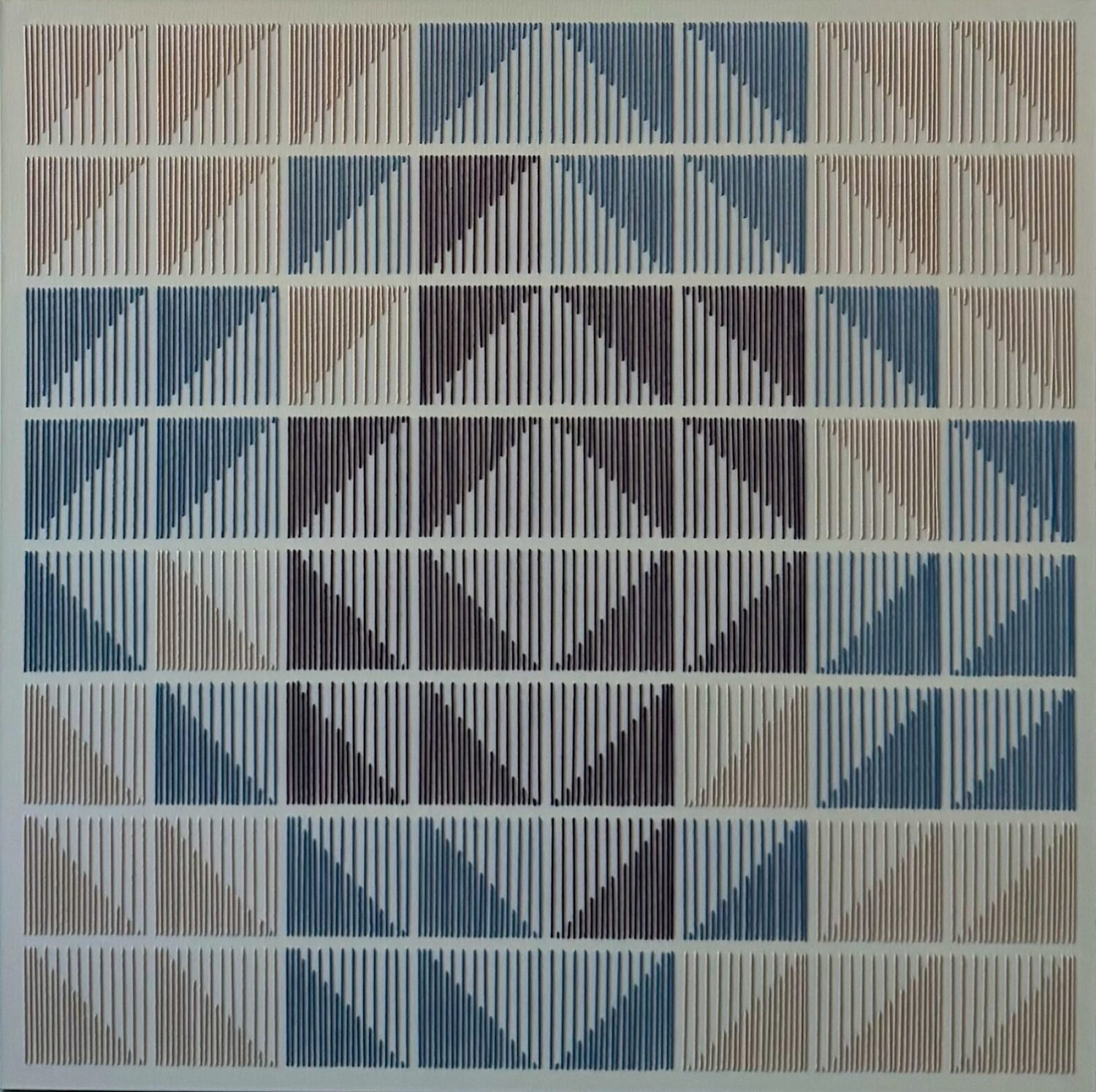
Emergent Axis II (2025)
Hand-stitched cotton yarn on acrylic painted canvas
100 x 150 cm
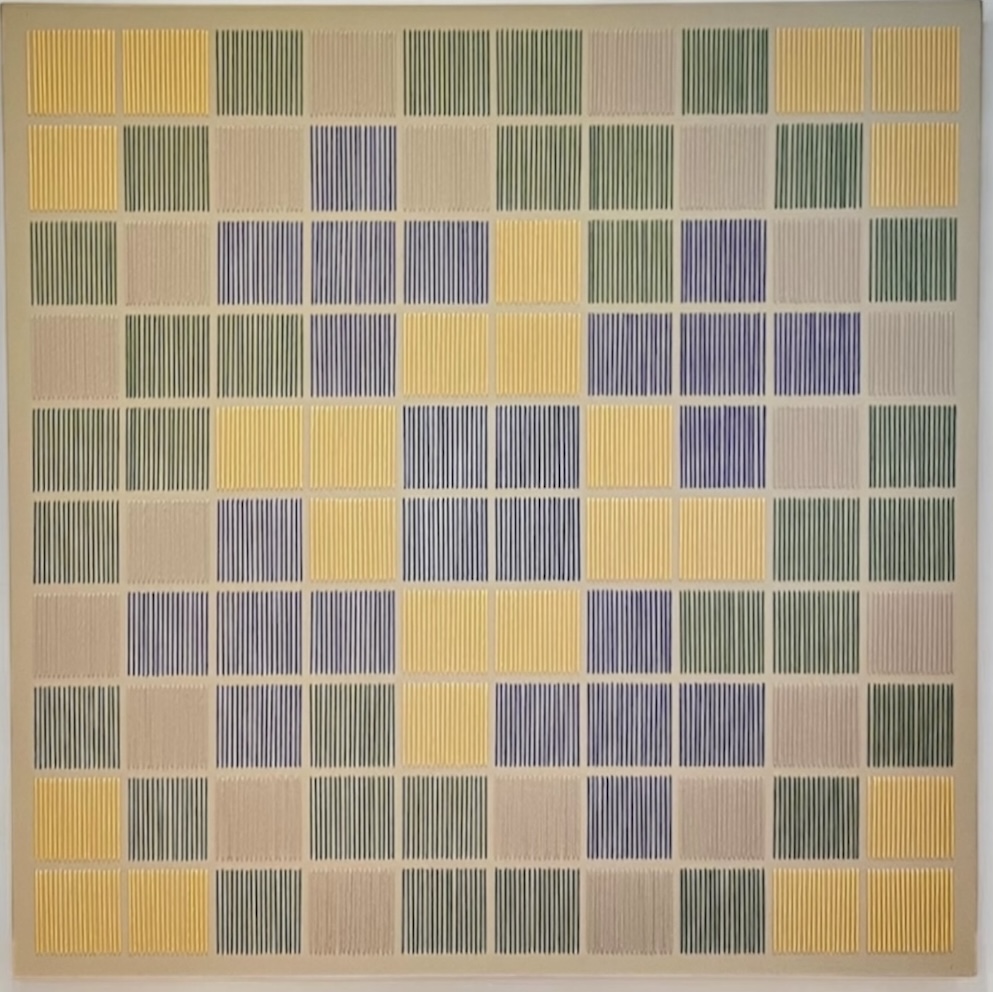
Silent Code II (2025)
Hand-stitched cotton yarn on acrylic painted canvas
100 x 100 cm
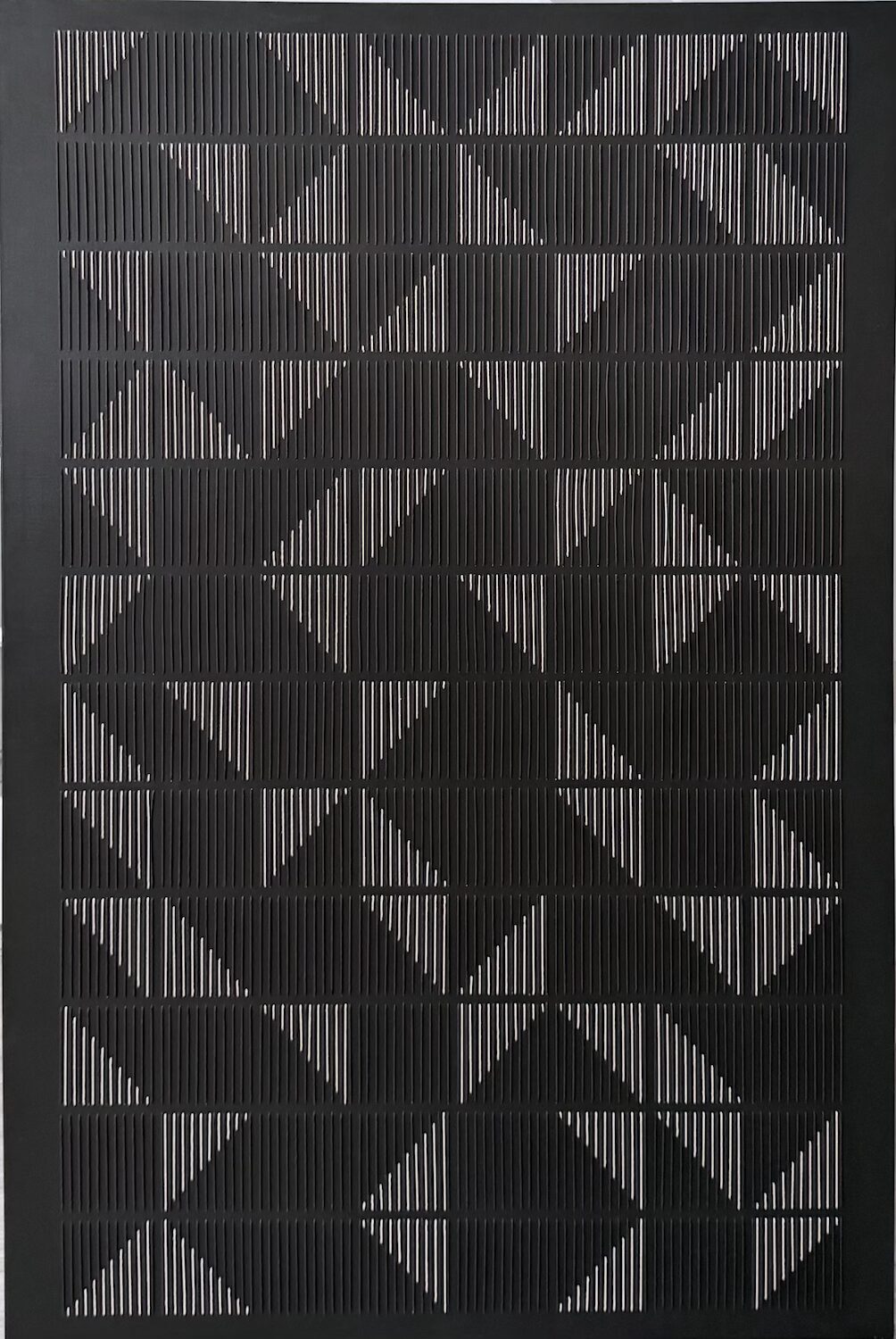
Silent Code III (2025)
Hand-stitched cotton yarn on acrylic painted canvas
100 x 150 cm
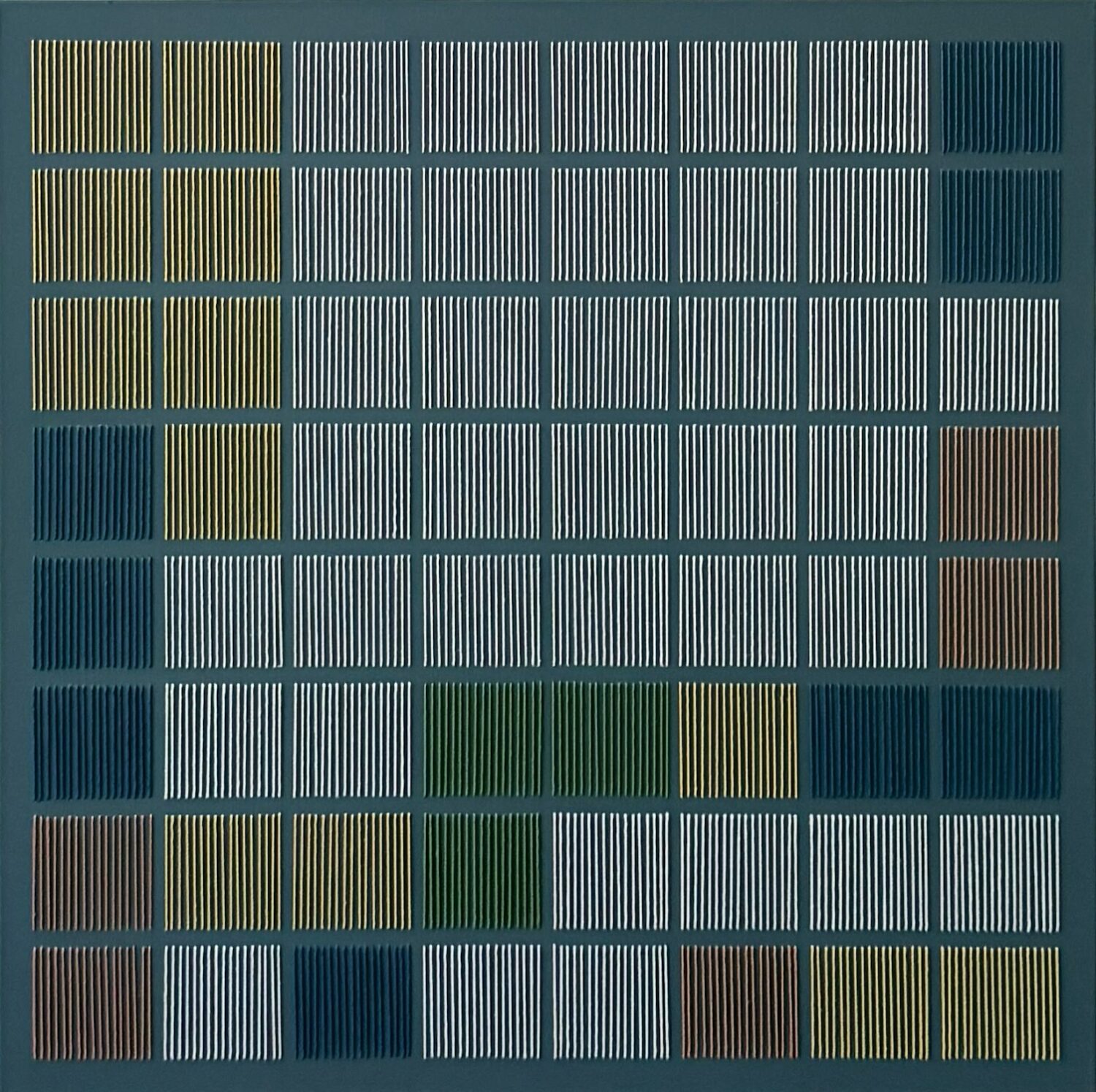
Color Intervals II (2026)
Hand-stitched cotton yarn on acrylic painted canvas
76 x 76 cm
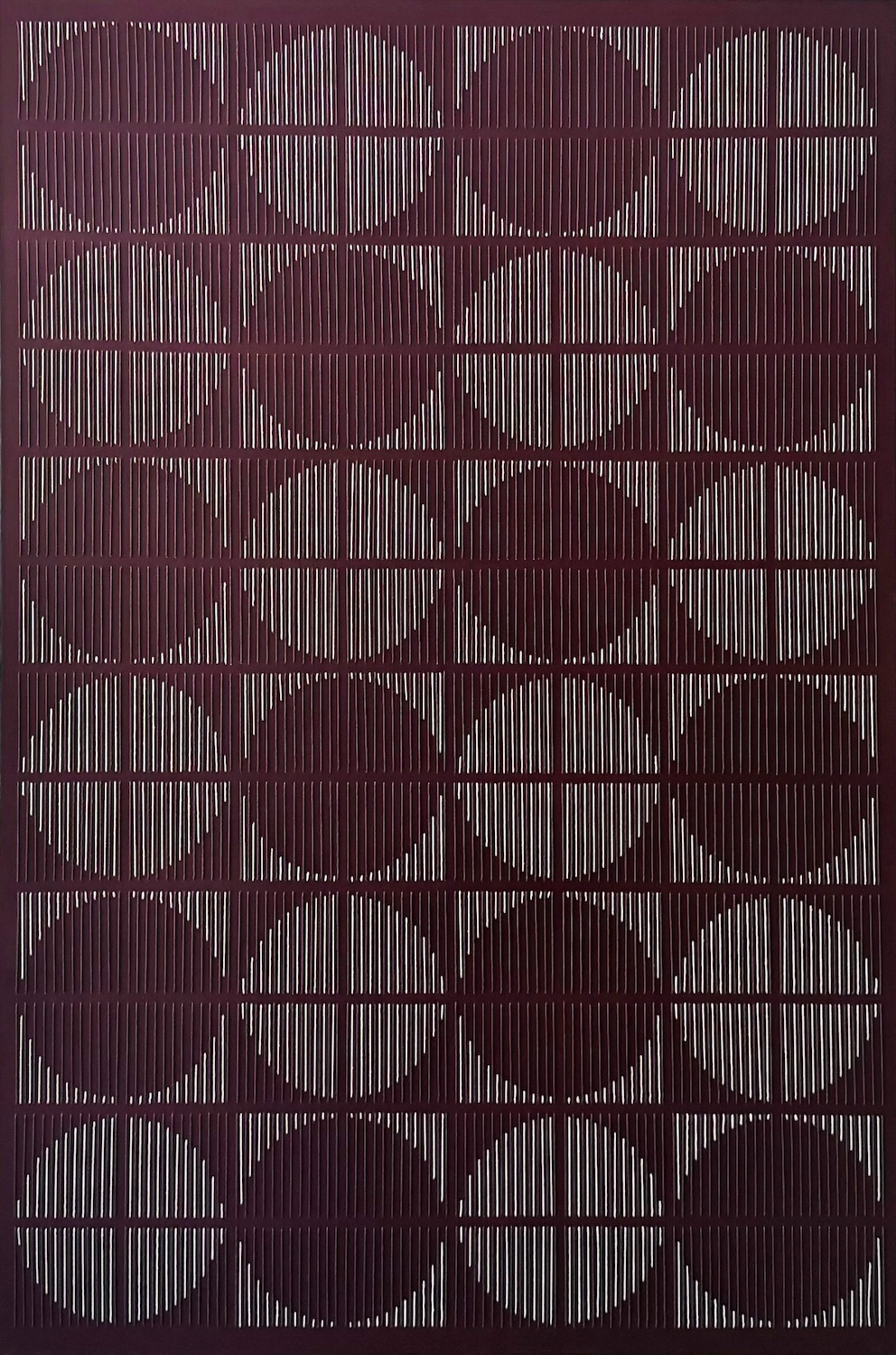
Pulse Field II (2025)
Hand-stitched cotton yarn on acrylic painted canvas
100 x 150 cm

Silent Code I (2025)
Hand-stitched cotton yarn on acrylic painted canvas
100 x 150 cm
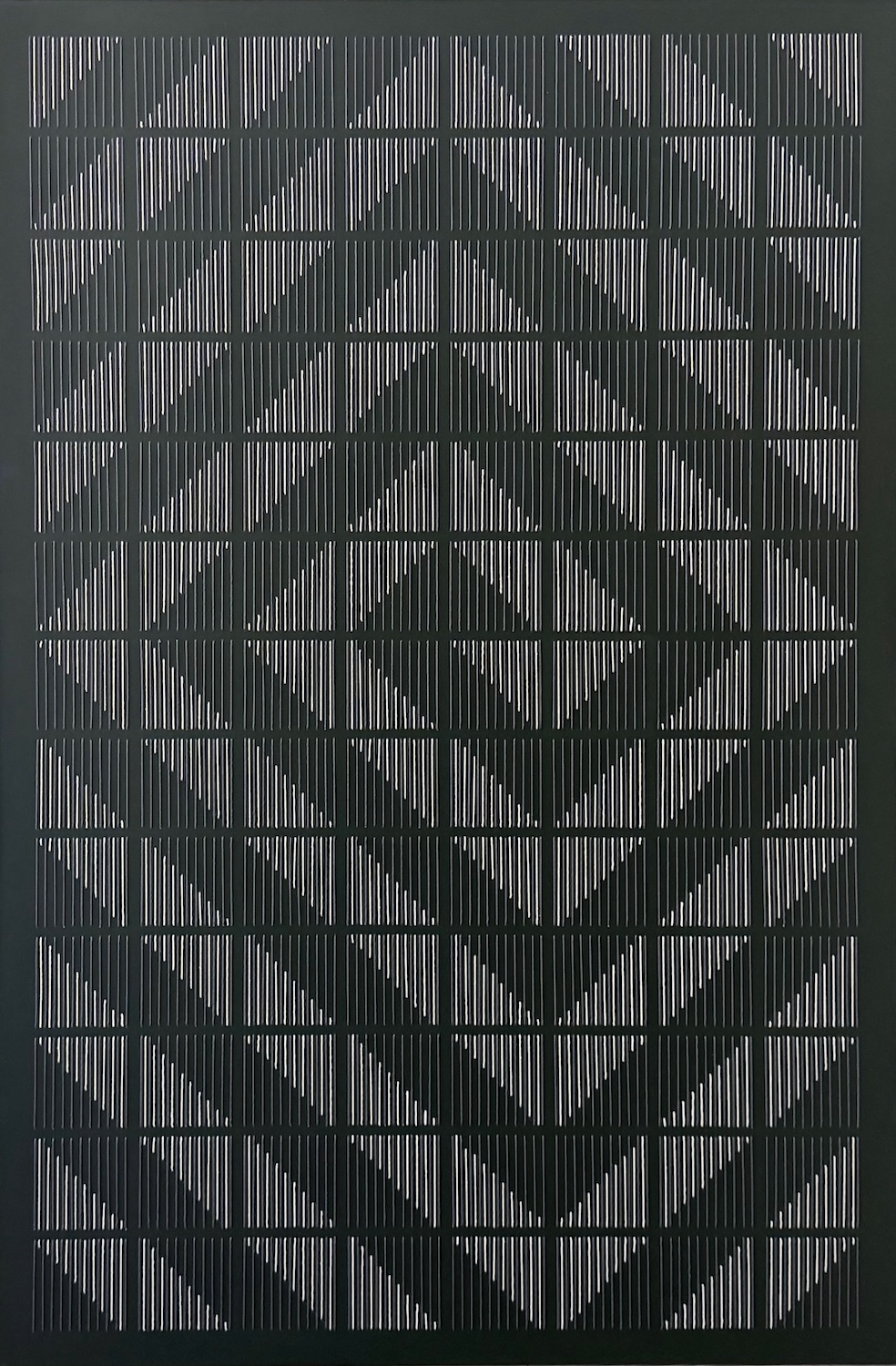
Emergent Axis I (2025)
Hand-stitched cotton yarn on acrylic painted canvas
100 x 150 cm
Silent Code III (2025)
Hand-stitched cotton yarn on acrylic painted canvas
100 x 150 cm
Ceren Muftuoglu is a Turkish Textile artist based in London. Exploring the relationship between order and disorder, she paints canvases before hand stitching thousands of stitches. “At first glance, the surfaces appear calm and minimal, but on closer inspection subtle deviations, layered details and rhythmic shifts begin to emerge.”
Where were you born and where do you live now?
I was born in Antalya, Turkey, and have been living in London for the past eight years.
What are your first memories of creating with textiles?
My earliest memories go back to my first years studying at La Salle. It was a very intensive programme where we explored every aspect of textiles, from fabrics and techniques to production processes and material knowledge. That experience encouraged me to see textiles not just as a material, but as a medium through which I could think, experiment and express ideas in different ways.
After your fashion degree, what led you to textiles rather than fashion?
After working in the fashion industry for many years, I wanted to move away from mass production and approach textiles from a more contemporary and artistic perspective. I was looking for a space where I could develop my own visual language—one that was slower, more reflective, and entirely my own.
What appeals to you about using textiles in your practice?
I’ve always been drawn to the physical and tactile qualities of textiles. Working with hand stitching makes time a visible part of the making process. The repetitive movements and the rhythm they create naturally connect with the conceptual ideas behind my work.
How do you describe your work?
I create my work through a minimalist visual language. Using geometric repetition, rhythm and hand stitching, I explore the relationship between order and disorder. At first glance, the surfaces appear calm and minimal, but on closer inspection subtle deviations, layered details and rhythmic shifts begin to emerge. This contrast is a fundamental part of the conceptual framework of my practice.
What techniques and materials do you use?
I work with cotton canvas, creating a painted surface with acrylic before stitching by hand using cotton thread. Each piece is built from thousands of repeated stitches based on a carefully planned geometric composition. Throughout the process, paint, thread and stitch work together to create both a visual and tactile surface.
Why do you paint the canvas rather than use a coloured fabric or another textile technique?
Painting the canvas gives me complete control over the surface. It allows me to develop colour, texture and composition as one unified whole. Rather than working with pre-coloured fabric, I create the ground myself, establishing a stronger relationship between paint and stitch. As a result, the thread becomes more than an added material—it becomes an integral part of the image itself.
Your work has a considered almost minimal quality. How do you design each piece?
Every piece begins in a digital environment. I use programmes such as Adobe Illustrator to carefully plan the geometric structure, proportions and rhythm of each composition. Behind every work is a precise mathematical framework. Once the design is finalised, I transfer the exact measurements onto the canvas and complete the entire work by hand.
How long does a piece take?
It depends entirely on the scale of the work and the density of the stitching. Most pieces take anywhere from several weeks to several months to complete. The making process requires a great deal of patience and time.
What is your proudest career moment so far?
I think the proudest moment has been seeing my work recognised and exhibited by different galleries and institutions. I spent many years quietly developing my practice, so seeing that dedication begin to resonate with others and connect with audiences has been incredibly meaningful.
Do you have any advice for aspiring textile artists?
Give yourself time to develop your own artistic language. Rather than following trends, focus on the ideas that genuinely excite you. I believe the strongest practices are built through consistency over time. And, of course, one of the most important parts of that is working hard.
Do you have any upcoming exhibitions?
Yes, This summer, my work will be featured in Under the Same Sun at Circle Contemporary https://circlecontemporary.co.uk and Summer Contemporary at Britten Pears Arts. https://www.brittenpearsarts.org. My work is also currently on display with 8 Holland Street https://8hollandstreet.com/ and I am developing new projects with Chi Art Gallery in Turkey.